
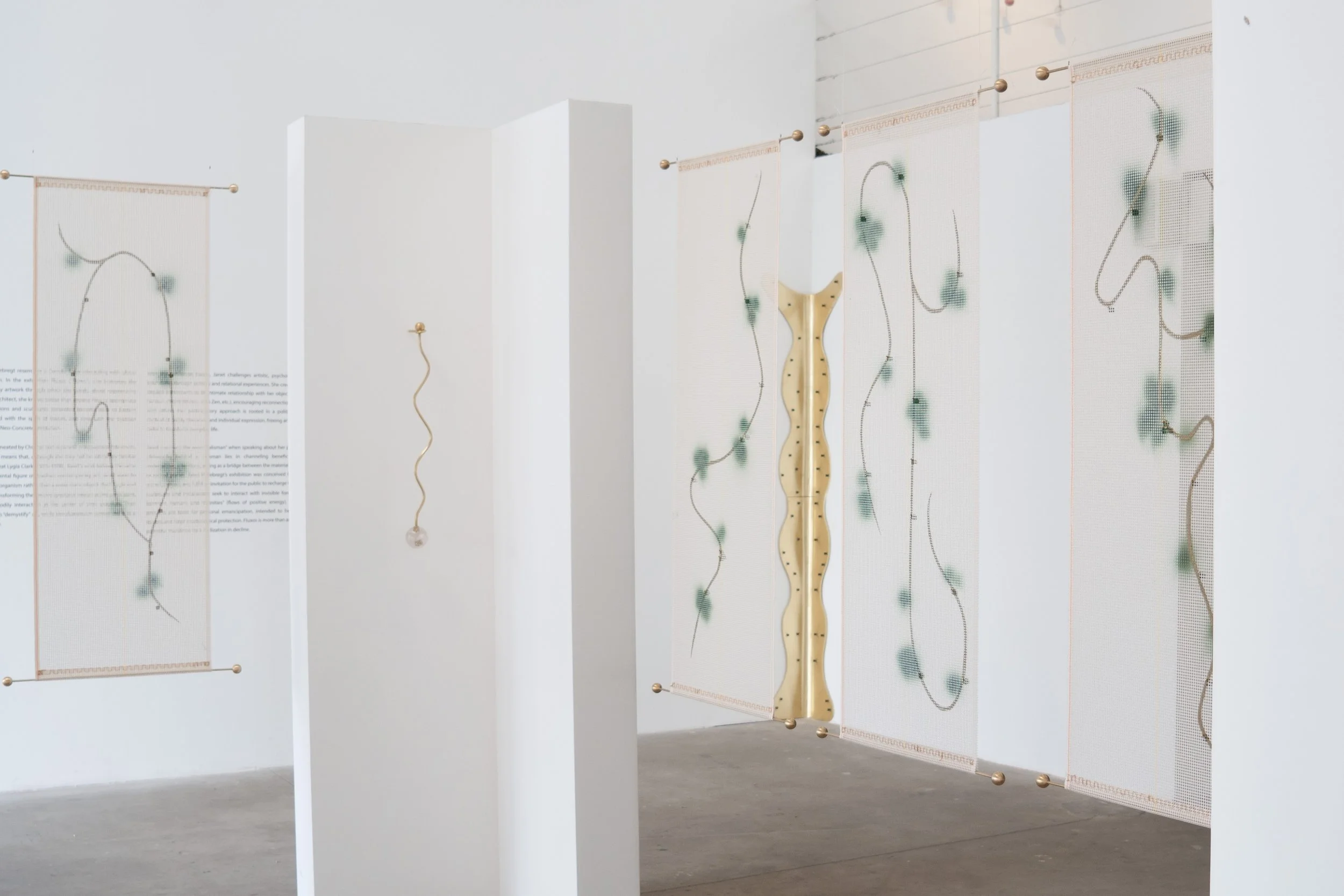
Curatorial Text by Marc Pottier
This is the abbreviated wall text, the original version is places below the exhibition images and focuses more on the new works developed for this exhibition)
The work of Janet Vollebregt resembles a Coriolis force interacting with global atmospheric circulation. In the exhibition Fluxos (“Flows”), she immerses the public in a participatory artwork through which she speaks about regenerative energy. Trained as an architect, she knows better than anyone how to appropriate spaces, where the installations and sculptures presented become odes to Eastern philosophies, combined with the spirit of stones, and even with the Brazilian humanist and sensorial Neo-Concrete revolution.
In her creative flow, permeated by Chinese and Japanese philosophical references, her immersion in Brazil means that, although she may not be intimately familiar with the work of the great Lygia Clark (1920–1988), Janet’s work follows the same spirit. Like this fundamental figure of Brazilian contemporary art, Janet seeks to make her work a living organism rather than a mere static object. Both Lygia and Janet redefine art by transforming the passive spectator into an active participant, placing sensory and bodily interaction at the center of their practices. Their relational objects aim to “demystify” art, while simultaneously connecting it to a civilizational philosophy.
With the exhibition Fluxos, Janet challenges artistic, psychological, and social boundaries through sensory and relational experiences. She creates situations that engage participants in an intimate relationship with her objects (Salão Jin Shin Jyutsu, prayer cylinders, João Zen, etc.), encouraging reconnection with oneself and with others. Her participatory approach is rooted in a political and aesthetic context of bodily liberation and individual expression, freeing artistic expression in order to transform everyday life.
Janet mentions the word “talisman” when speaking about her prayer cylinders. The philosophy behind a talisman lies in channeling beneficial energies and materializing an intention or desire, acting as a bridge between the material world and higher or sacred planes. Janet Vollebregt’s exhibition was conceived like a talisman: to attract, protect, and fulfill an invitation for the public to recharge their energies. Her sculptures and installations seek to interact with hidden forces, like contracts between humans and “divinities” (flows of positive energy). The works Janet presents are tools for personal emancipation, intended to help dispel certain doubts and forge psychological protection. Fluxos is more than an exhibition; it is a powerful manifesto for a civilization in decline.
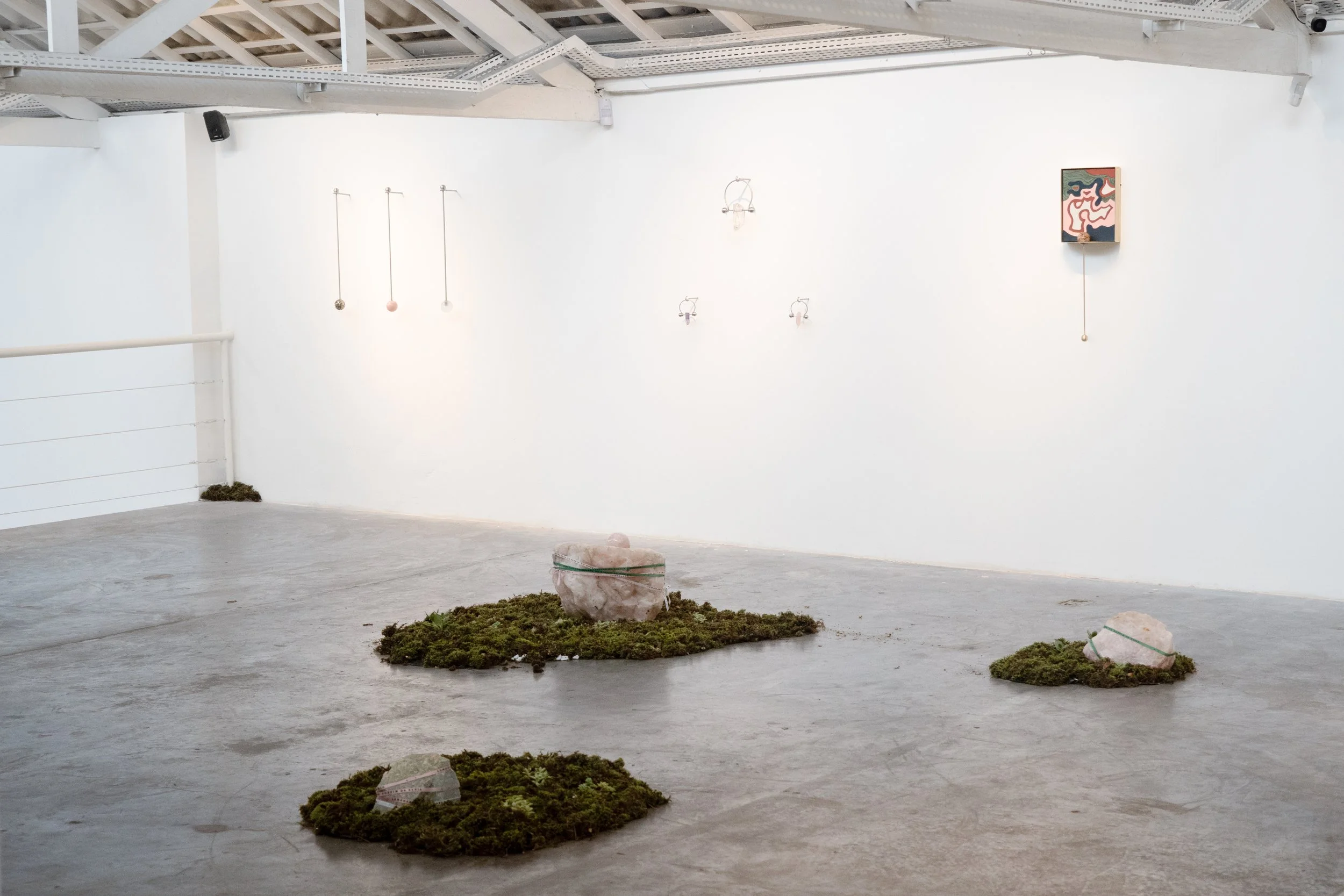
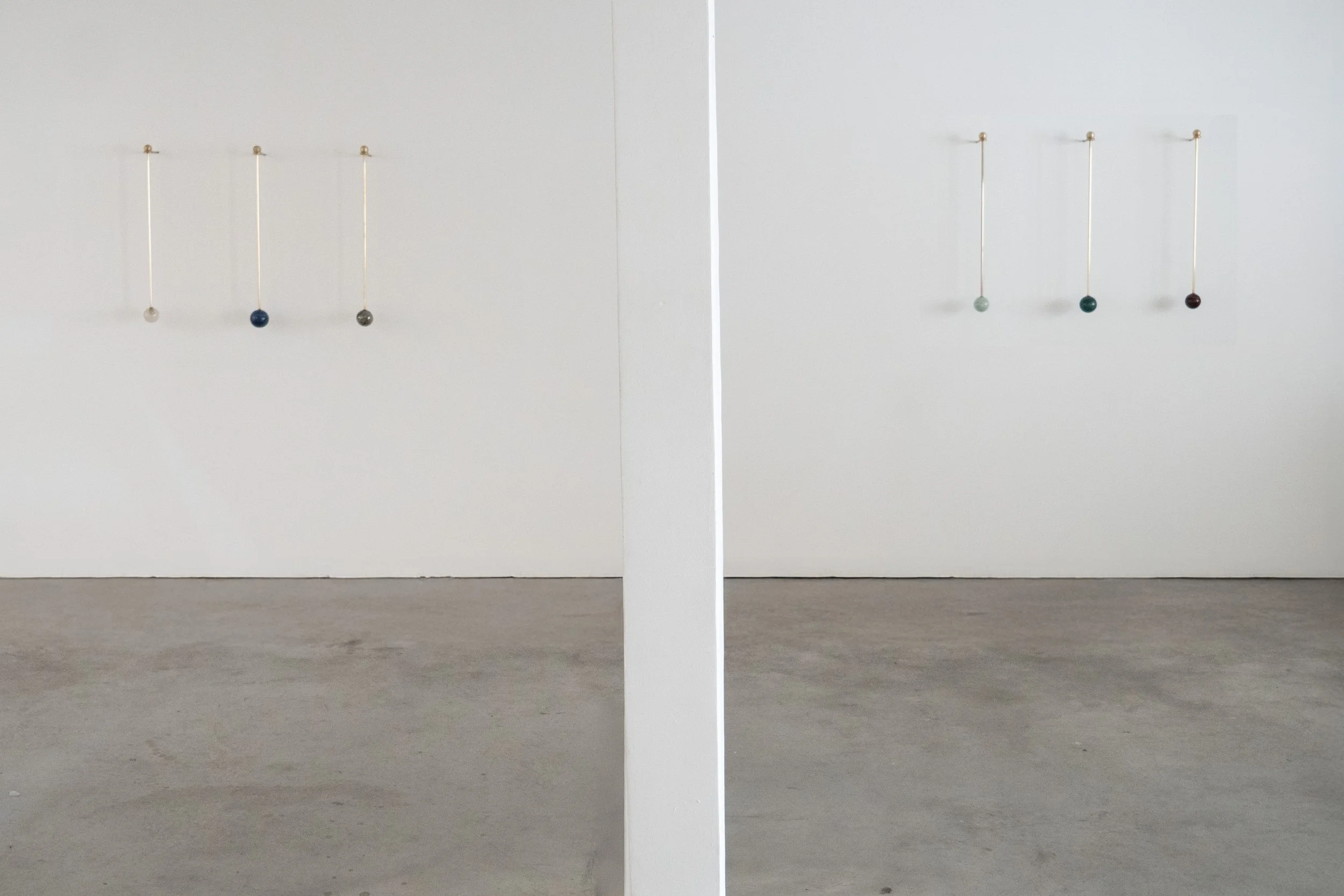
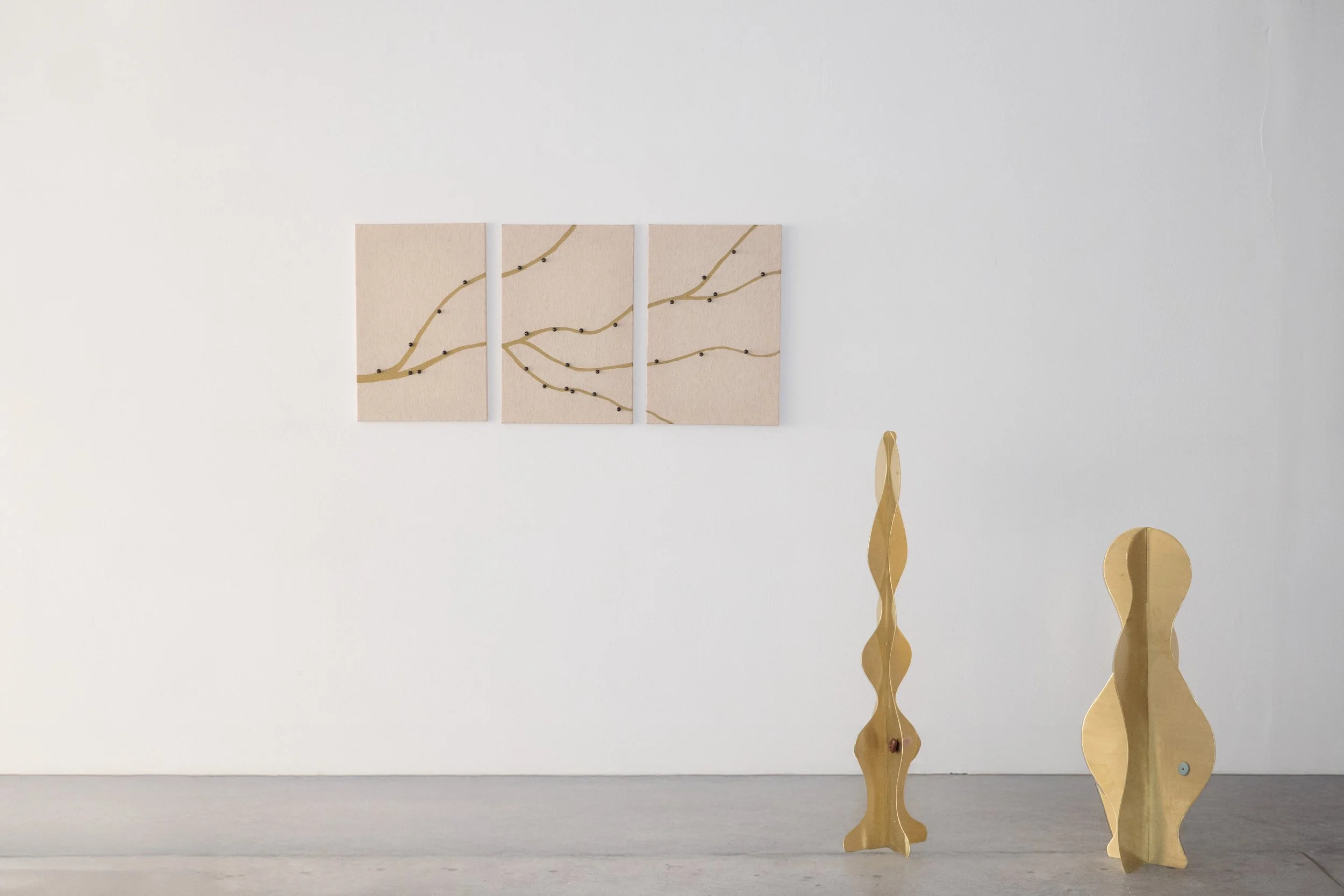
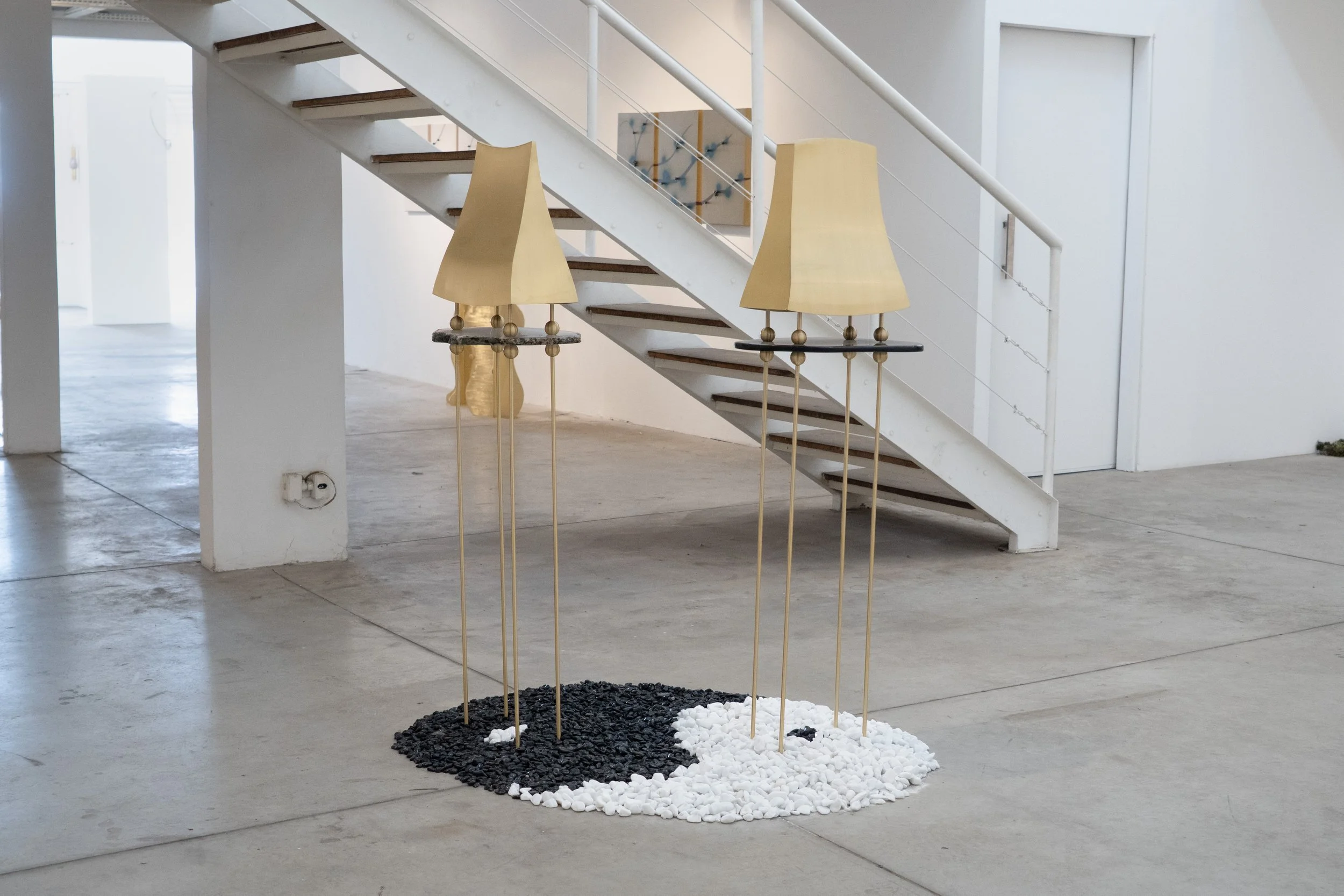
“I would like to address the importance of being attentive to the invisible, yet perceptible: energy. That which we do not see (and do not speak about) determines much of what we do and create. I would like to offer people tools so they can perceive and improve the flow of energy.” — JV
Janet Vollebregt’s work resembles a Coriolis force interacting with global atmospheric circulation. With the exhibition Flows, she immerses the audience in a participatory artwork through which she speaks of regenerative energy. Trained as an architect, she masterfully appropriates spaces, where installations and sculptures presented become odes to Eastern philosophies, combined with the spirit of stones, and even with the Brazilian humanistic and sensory Neo-Concrete revolution.
“In this exhibition, I would like to focus on working with energy, enhancing the energetic flow both within the space and within the people who occupy, use, or move through it. This has always been the central theme of my work since I studied Architecture at Delft University of Technology. In addition to Architecture, I studied Chinese Feng Shui (the functioning of energy in space) and Japanese Jin Shin Jyutsu (the functioning of energy in and around the body), which also led me to study Japanese philosophy and religions. My works carry and communicate influences from these studies.” — JV
The artist’s vision for this museum-like exhibition is a true journey that, beyond the aesthetic power of the works presented, offers a sensory experience, distancing visitors from everyday life and leading them toward the spiritual. From the entrance of the gallery with the “Jin Shin Jyutsu Parlour” to the “Prayer Wheels” and the “Energy Benders,” she speaks to us of an art that merges with life and the body. We cannot describe every work presented in this exhibition, so we will focus on those that define its overall rhythm.
“My work offers tools to become aware of the energetic world.” — JV
“I work with subtle energy to harmonize both the user of the space and the space itself. My installations and art objects aim to provoke energetic awareness in the public. Through the
invisible power of energy fields, my work seeks to establish harmony and connection with the greater whole, increasing the sense of welcome and nourishment in the environment where it is placed.” — JV
Within her creative flow, permeated by Chinese and Japanese philosophical references, her immersion in Brazil means that, although she was not deeply familiar with the work of the great Lygia Clark, Janet’s work follows a similar spirit. Like this fundamental figure of Brazilian contemporary art, Janet seeks to make her work a living organism rather than a mere static object. Both Lygia and Janet redefine art by transforming the passive spectator into an active participant, placing sensory and bodily interaction at the center of their practices. Their relational objects aim to “demystify” art, connecting it simultaneously to a civilizational philosophy.
With the exhibition Flows, Janet challenges artistic, psychological, and social boundaries through sensory and relational experiences. She promotes situations that involve participants in an intimate relationship with her objects (Jin Shin Jyutsu Parlour, prayer wheels, João Zen, etc.), encouraging reconnection with oneself and with others. Her participatory approach is rooted in a political and aesthetic context of bodily liberation and individual expression, freeing artistic expression in order to transform everyday life.
“Energy precedes the material world. To build a better world, we need to begin by taking care of our own energy. We do have some influence over it, and that is the first step. We can also care for the energy of others, but without taking care of our own energy first, we will soon become exhausted. My work offers tools to become aware of the energetic world and ways of working with it. Some works offer tools for awareness of personal, physical, emotional, and spiritual energy; others focus more on awareness of how energy functions within space and the environment. Sometimes my work appears as installations or spaces; I am still very connected to architecture and would like to expand my horizons in order to reach a wider audience.” — JV
Jin Shin Jyutsu Parlour
Lygia Clark would not have rejected the “Jin Shin Jyutsu Parlour,” this minimalist and open installation that respects the overall flow of the gallery space. The work is interactive, immersive, or contemplative, depending on the mode chosen by the visitor. Here, the artist undeniably aligns herself more closely with Zen culture.
Zen culture, a branch of Mahayana Buddhism originating from Chinese Chan Buddhism and developed in Japan, focuses on meditation to achieve enlightenment (satori). It advocates simplicity, austerity, presence in the moment, and detachment from the ego in order to perceive the true nature of things. In this exhibition, Janet offers a new beginning, a spiritual purification, a form of rebirth, leaving behind the violence of the modern world. This initial experience is meant to allow visitors to continue their visit calmly and attentively, ready to interact with the other works presented in the exhibition.
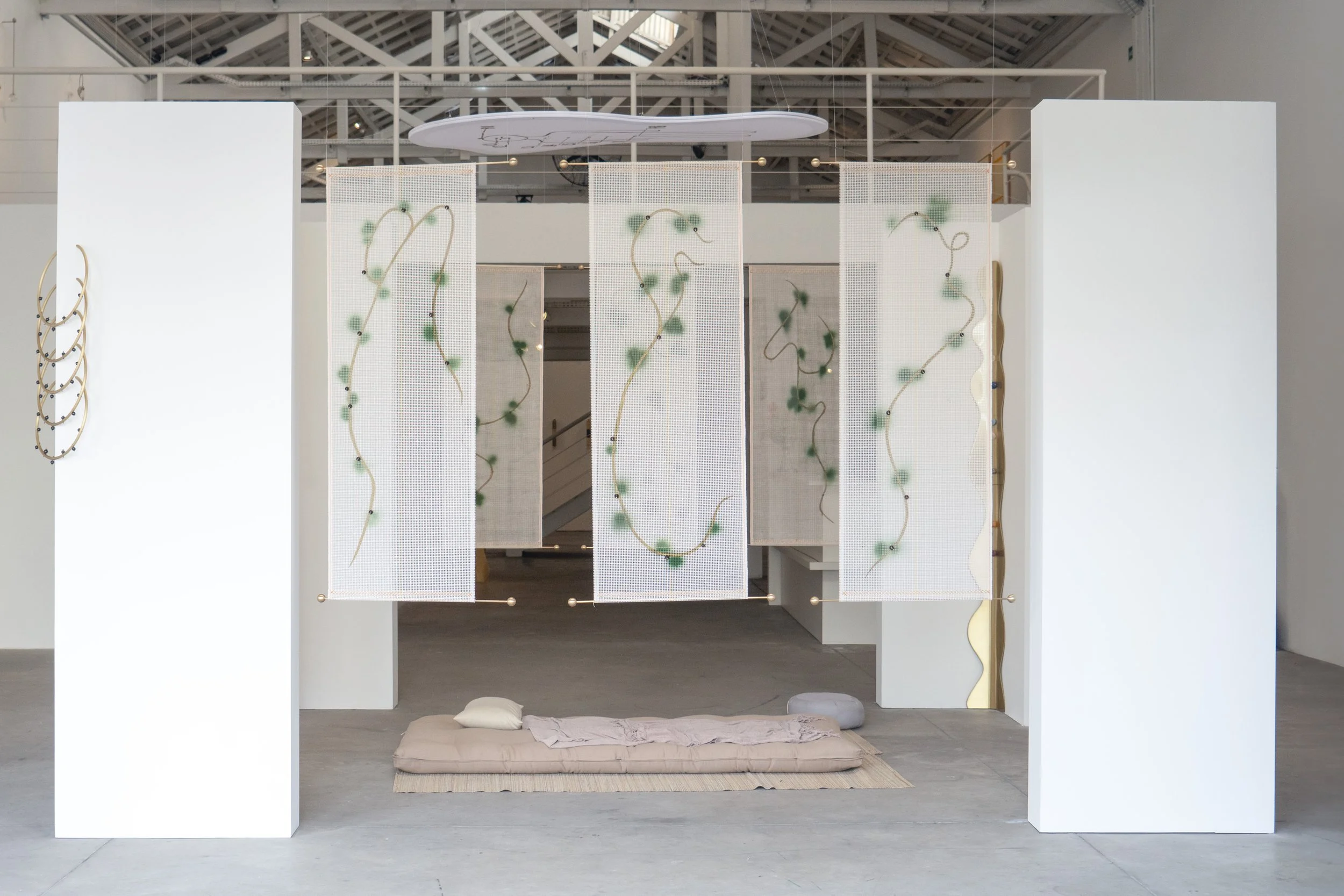
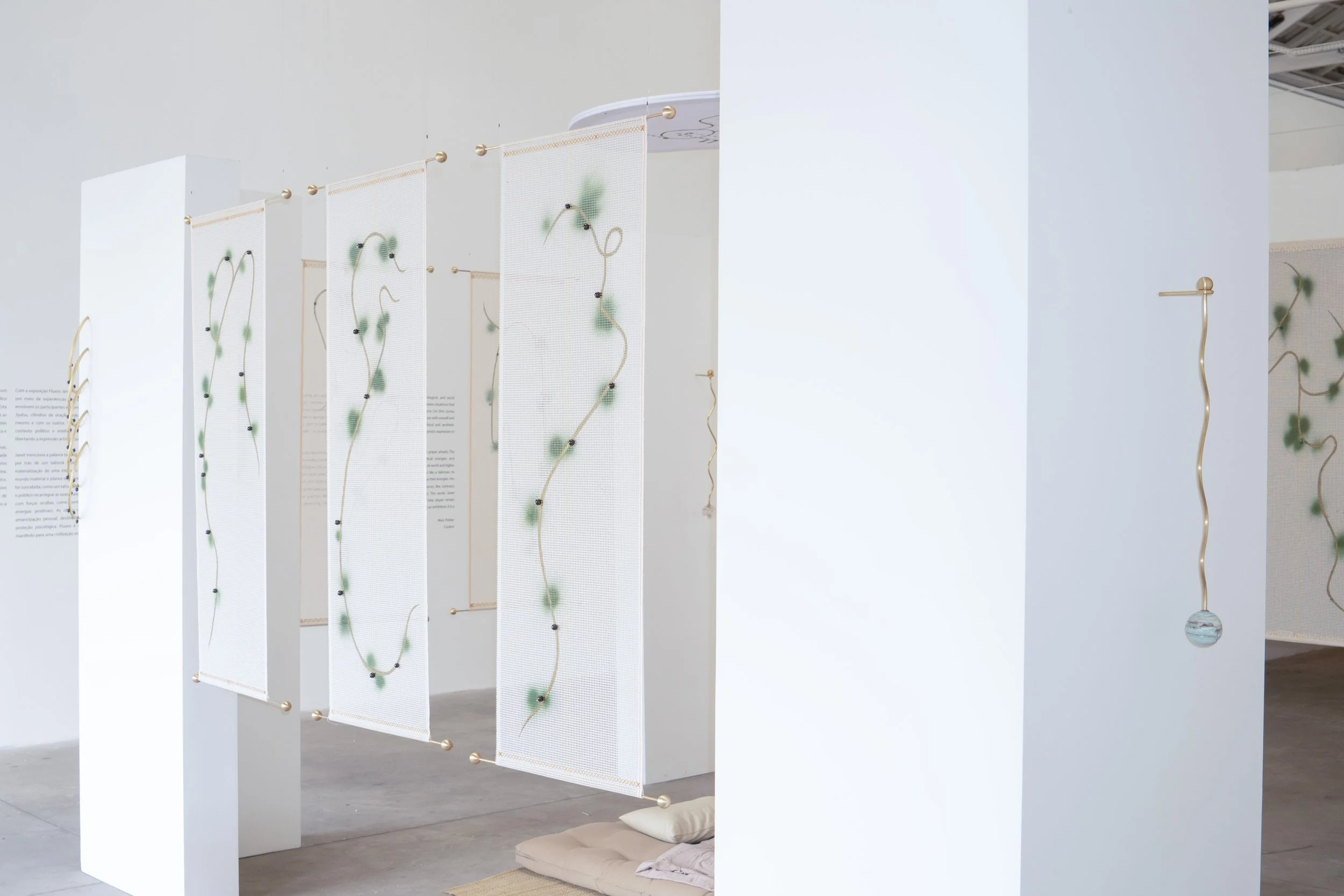
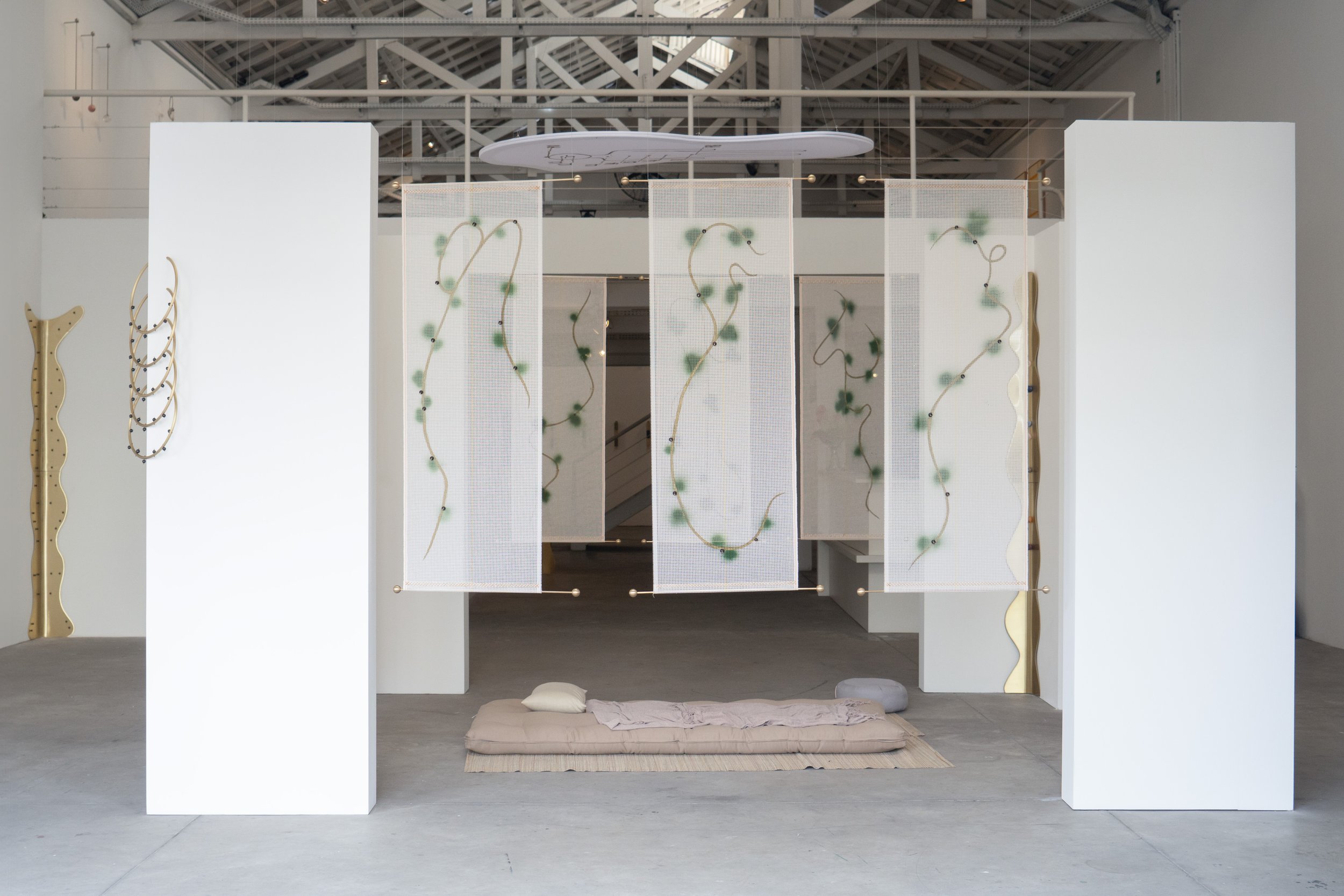
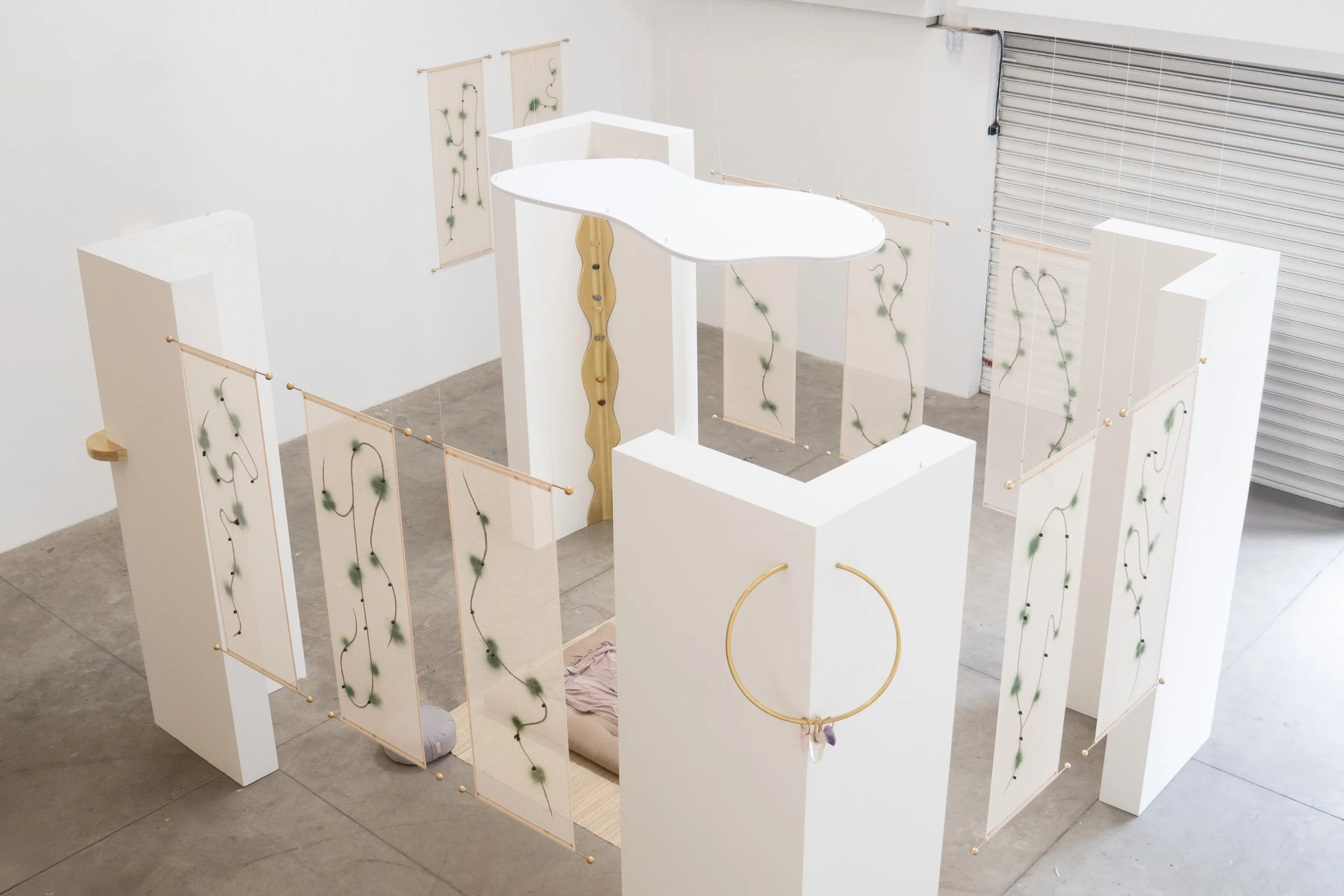
In this installation, people are invited to become aware of or experience the action of energy in space and within the body. The installation is a “space within a space.” Inside the installation, a tatami or futon is placed, and people are invited to lie down and practice Jin Shin Jyutsu on themselves.
Let us also remember that Jin Shin Jyutsu is an ancient Japanese art of energetic harmonization that uses gentle hand placements on 26 specific points of the body, called “Safety Energy Locks,” to release physical, mental, and emotional blockages. Similar to reflexology, though without pressure, it aims to balance the flow of vital energy in order to reduce stress and anxiety while promoting self-awareness.
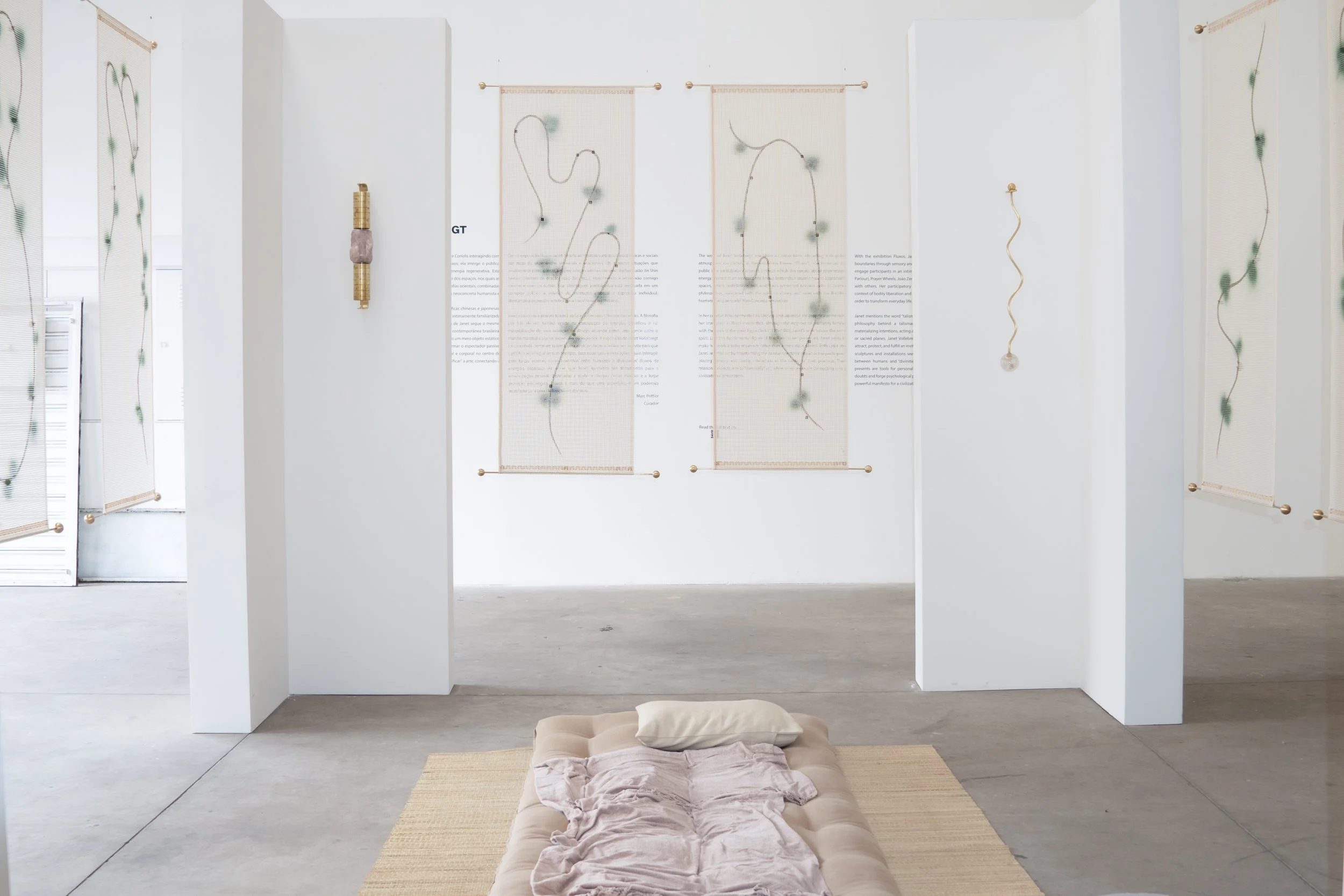
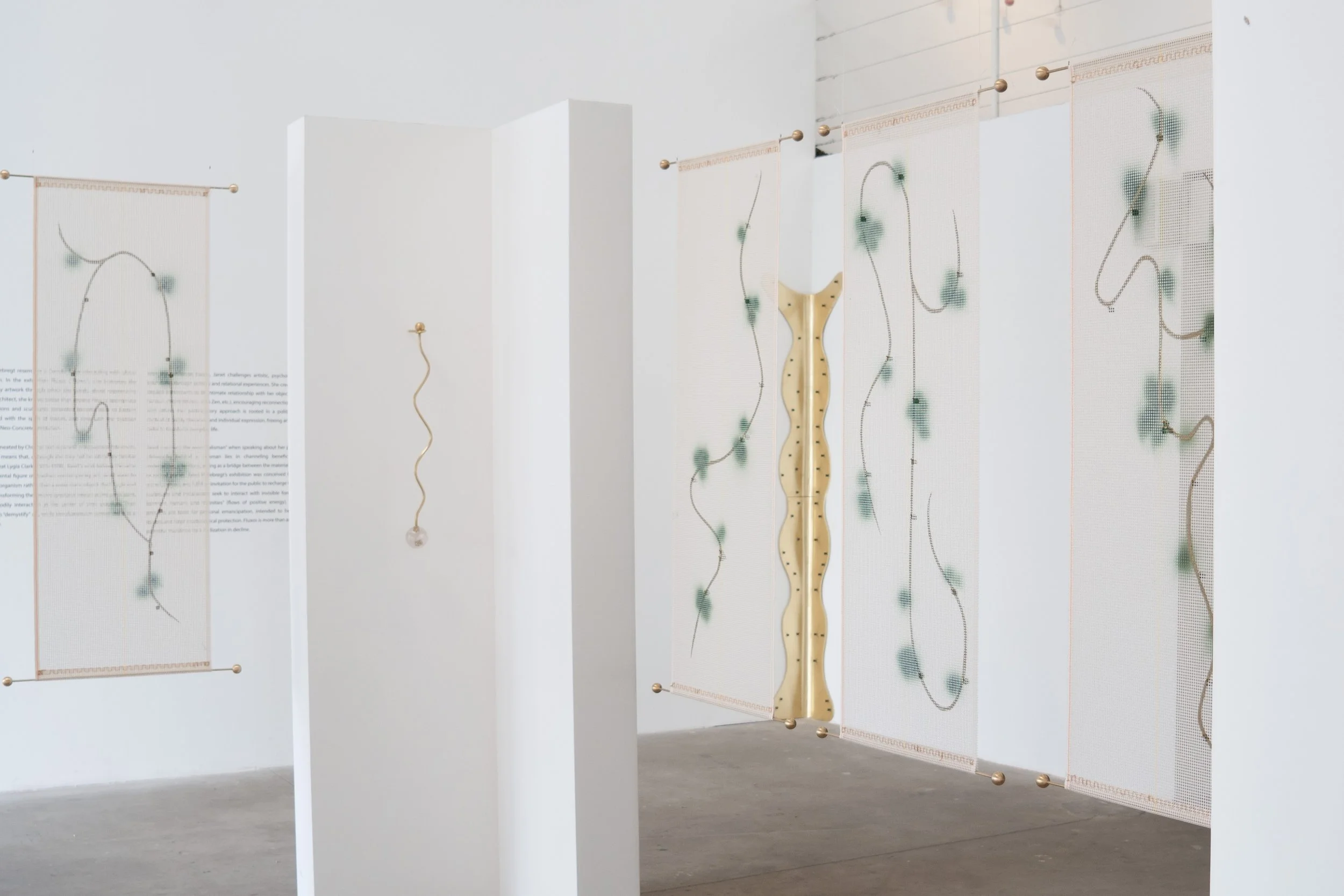
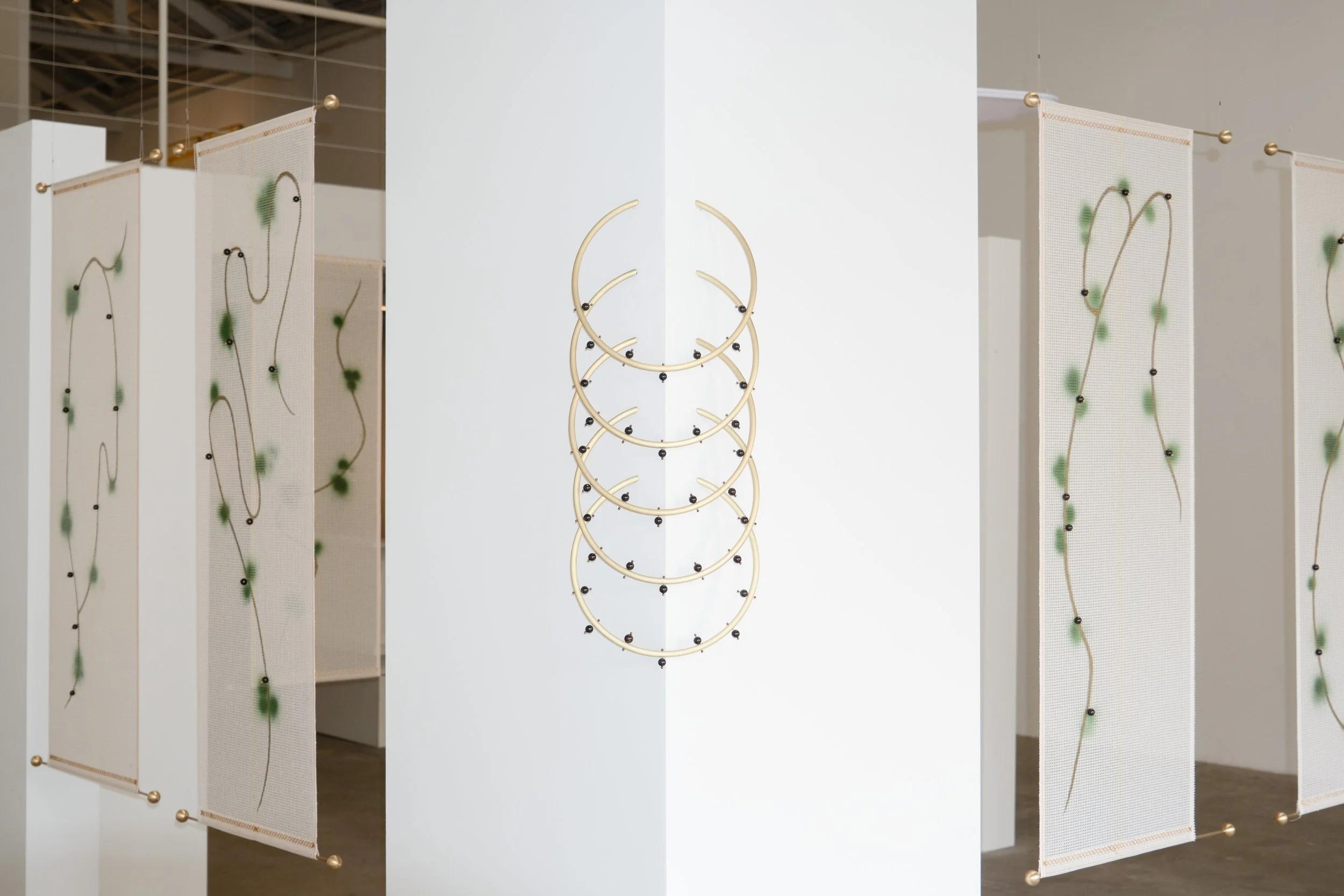
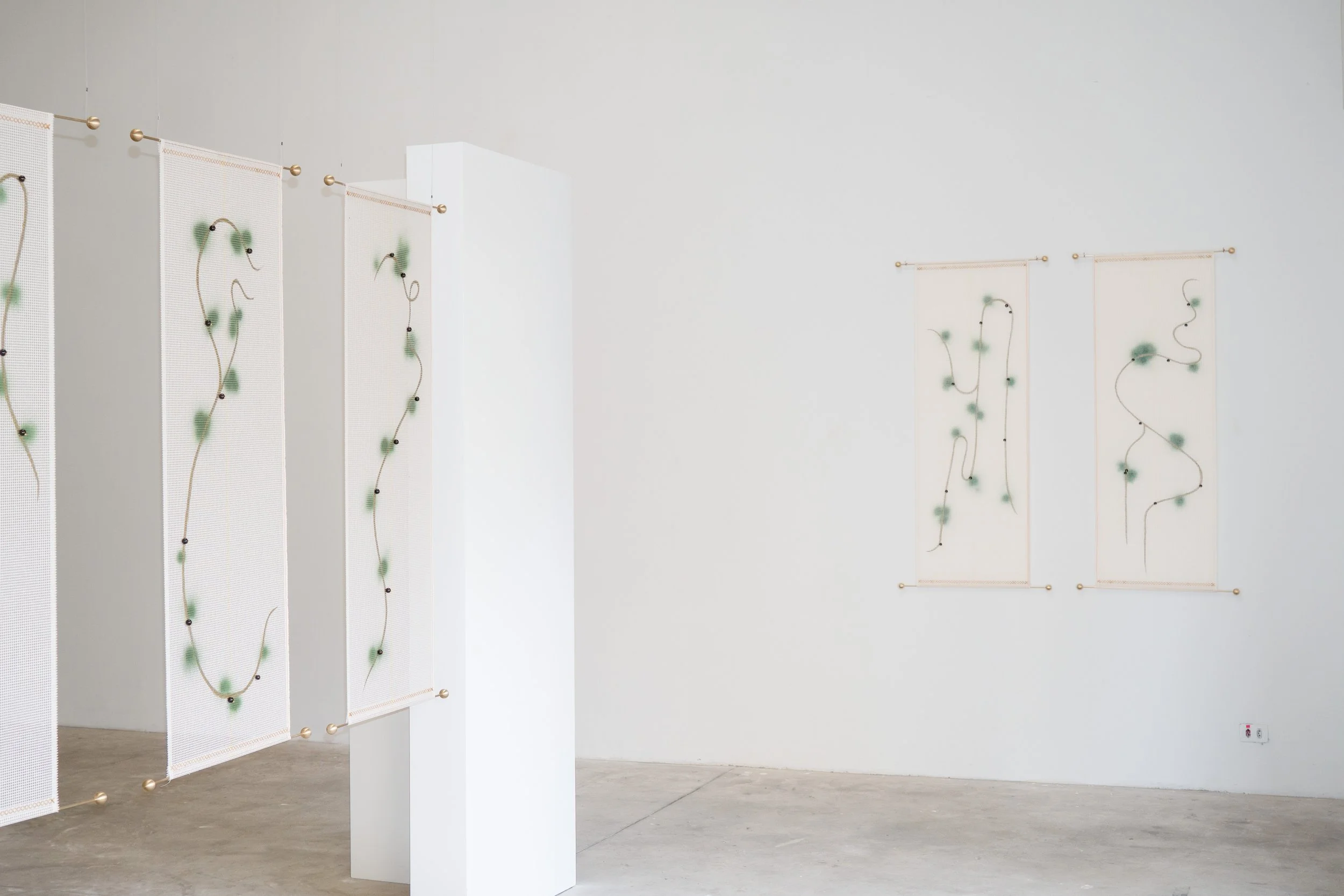
In Janet’s artistic installation, an explanation of how to apply Jin Shin Jyutsu to oneself is “in the cloud,” a suspended cloud hanging above the futon containing instructions. The Parlour has four corners composed of walls specially created for the exhibition. The remainder of the separation between the gallery circulation space and the parlour is made up of semi-transparent screens that are artworks in themselves. These works reference Jin Shin Jyutsu and incorporate garnet stones that resemble jabuticabas. While many such screens in Japan depict cherries and cherry blossoms, here the artist chose to work with the jabuticaba to emphasize the importance of Brazil in her work. The jabuticabas on these semi-transparent screens also indicate where energy blockages are located within the body.
João Zen
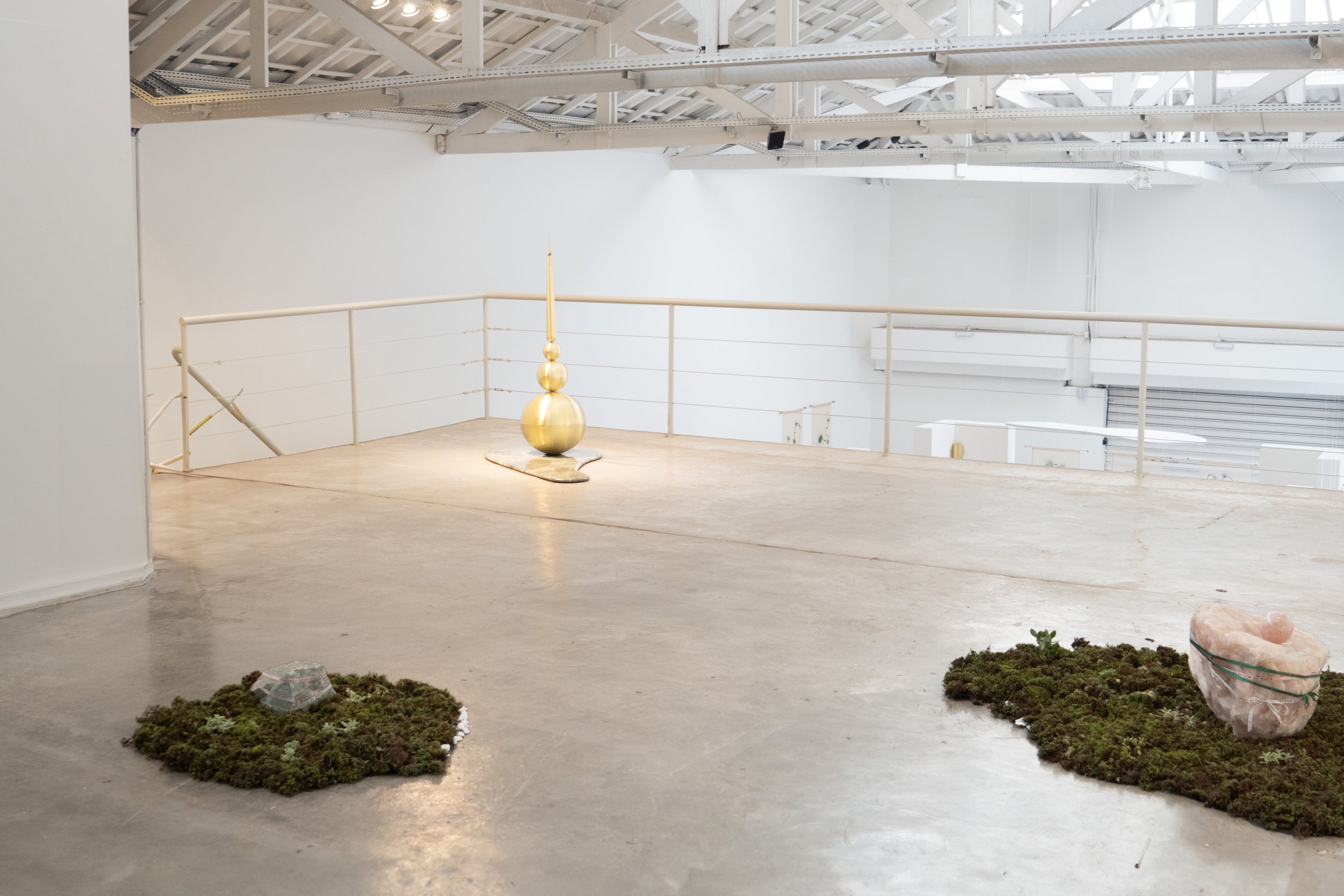
The work “João Zen” is inspired by the toy known in Portuguese as “João Bobo.”
The João Bobo (or roly-poly toy) is a rounded, weighted doll designed to sway and return upright after being pushed, never truly falling over. Usually shaped like animals or characters, it is used for physical activity, stress relief, and the development of motor coordination.
Its central message is never giving up, embodying the spirit of getting back up after falling or facing obstacles. It is a tangible metaphor for overcoming adversity. If only humans were emotionally prepared like the “João Bobo”: if someone throws you off balance, you simply return to your center. In truth, João is not “foolish” or stupid — João is wise. That is why the artist calls the work “João Zen.”
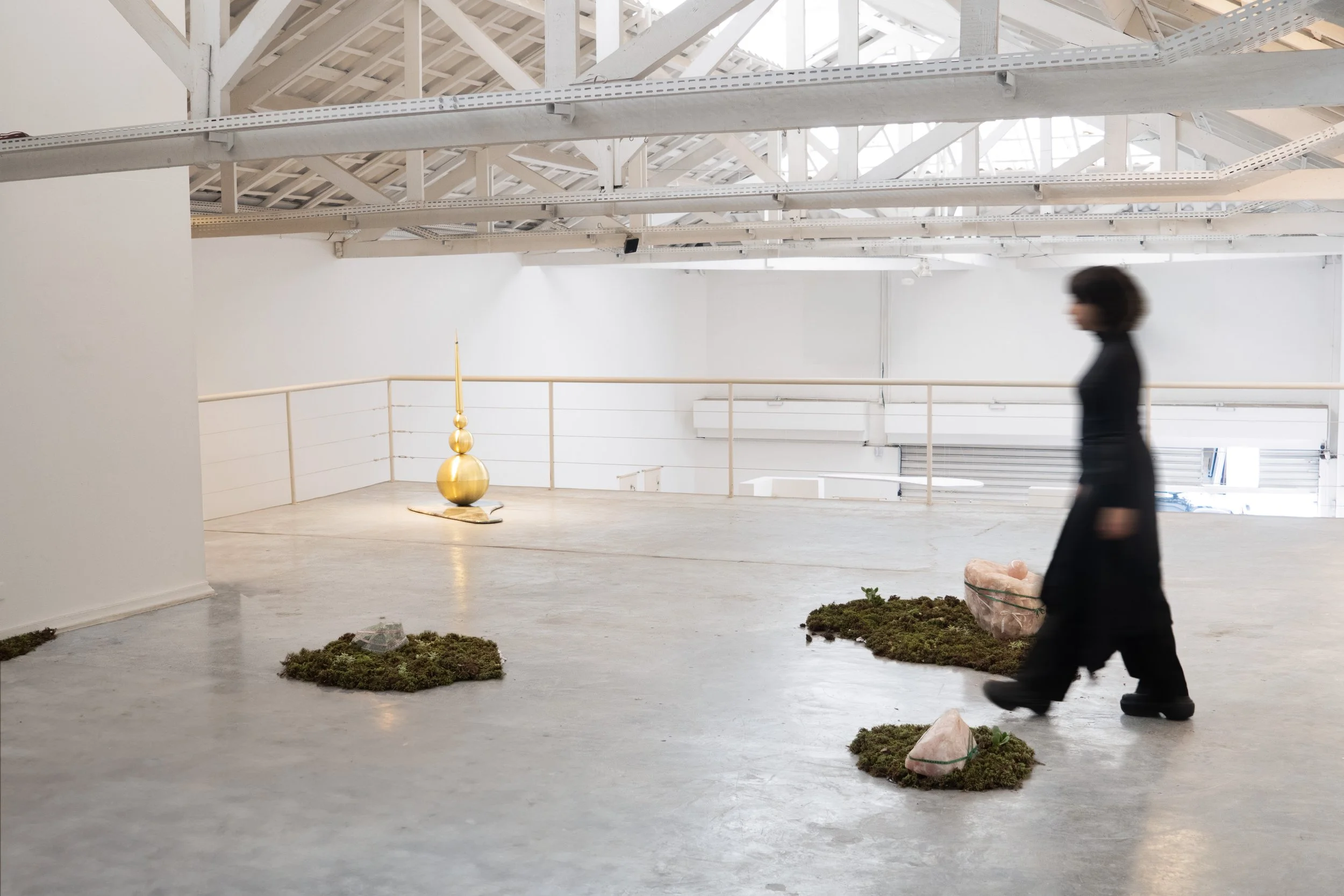
The work, made of elegant brass (quite different from the plastic used in toys), features a crystal element where people should touch it in order to move it, preventing the sculpture from becoming dirty. It is placed upon a thin polished stone evoking a puddle of water and therefore forms part of a larger installation within the space.
The João Zen sculpture, with its three rounded sections that taper before the pointed upper cone, evokes decorative elements found on certain Tibetan temple roofs, a kind of treasure vase (Bumpa): placed on corners or ridges, symbolizing inexhaustible spiritual abundance and prosperity.
Viewed from above, the sculpture can also be imagined as ripples created by a stone falling into water, propagating energy. João Zen, which also possesses the symbolic form of a body, will always return upright, rising again to face life’s challenges.
Prayer Wheels
The philosophy of prayer wheels, particularly in Tibetan Buddhism (mani wheels), is based on the diffusion of sacred mantras to generate compassion and positive energy. Spinning these cylinders, which contain thousands of prayers, is equivalent to reciting them, thus spreading spiritual benefits through the air, acting both as protection against evil and as a healing tool. This continuous mechanical prayer is often associated with the five elements (earth, air, fire, water, and space). The clockwise movement symbolizes the cycle of life, meditation, and spiritual progression.
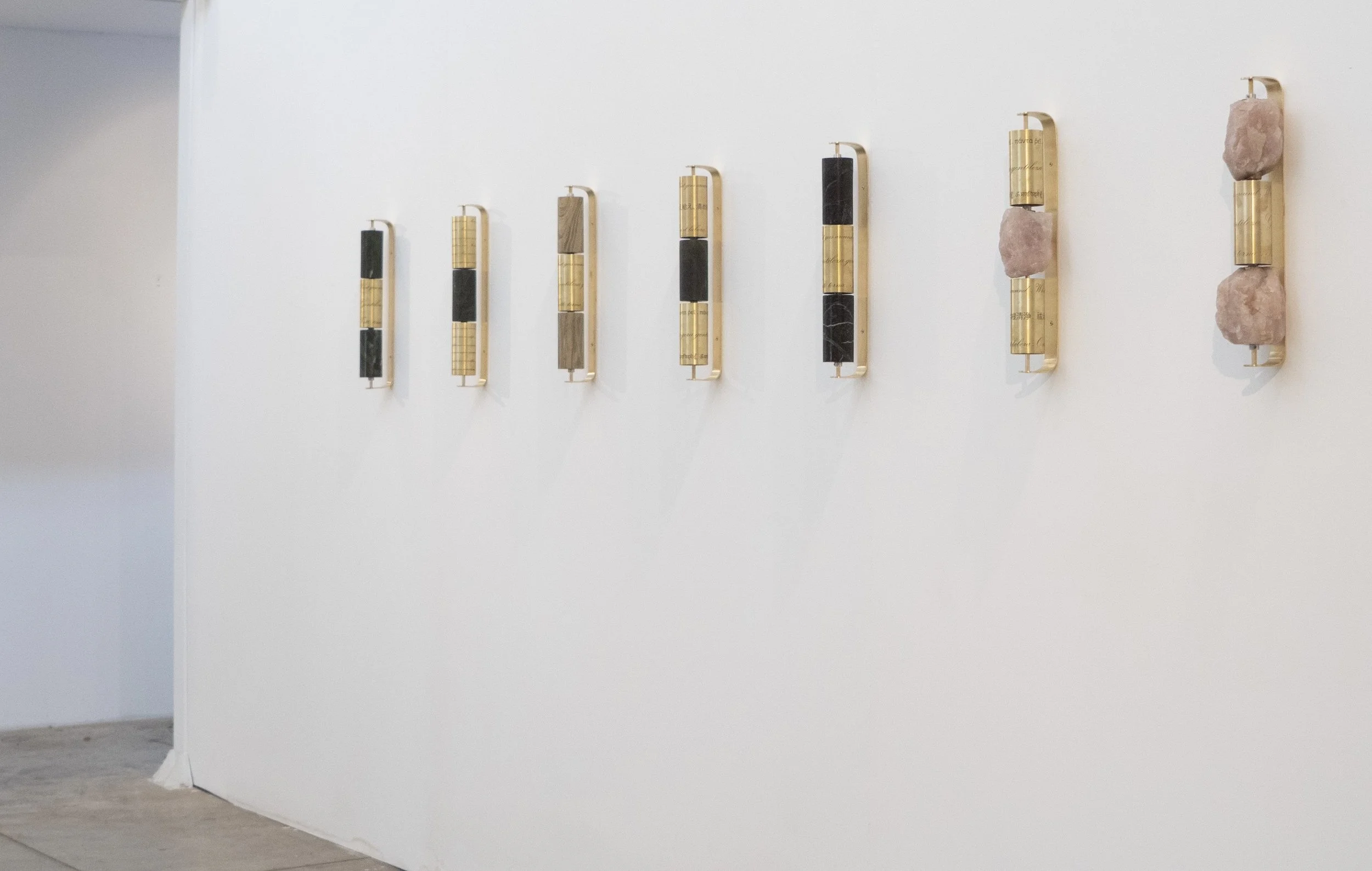
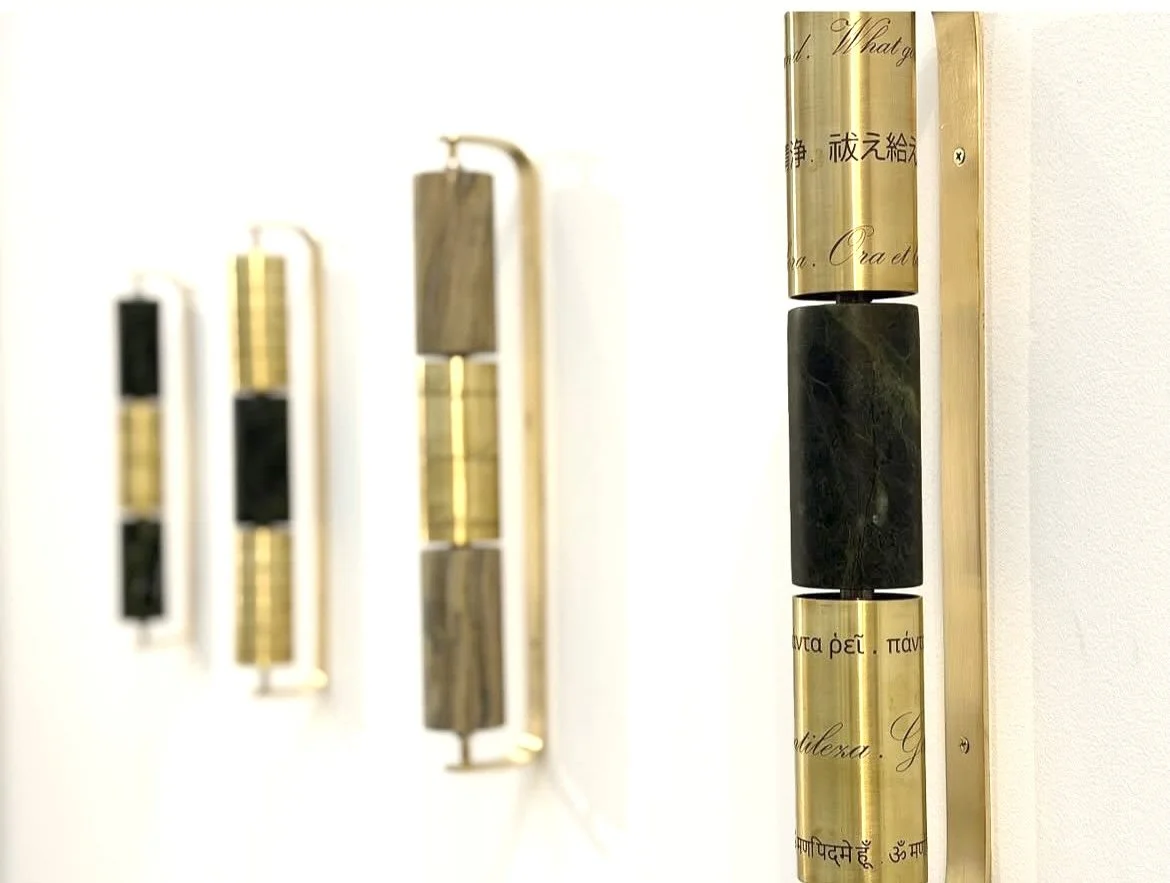
“Prayer Wheels is a new series that belongs to the ‘family’ of my ‘building piercings’ and ‘pendants’ series, works that reinforce my vision that buildings are ‘living’ entities and function as talismans for the protection of buildings or spaces, influencing both the space itself and its users through crystals and their vibrations.” — JV
“The prayer wheels introduce the energy of movement into space. In Feng Shui, stagnant energy creates dirt and decay; movement creates flow and growth. … I think our world needs many prayers, not necessarily religious or specific prayers, but simply words and thoughts of loving attention and uplifting energy. My prayer wheels integrate crystals and
natural stones and include texts from different cultures, such as ‘kindness generates kindness’ (*). These texts carry double meanings and a bit of humor, since the prayer wheels literally contain rotating elements ‘generating’ or ‘turning,’ but the main purpose is for people to keep in mind the deeper meaning of these words.” — JV
The prayer wheels are attached to the wall, and the public can spin the crystals and brass cylinders. The integrated crystals have rough and polished parts. Over time, as people touch the stones with their hands to spin them, the rough parts of the crystals will also become polished, just as the energy of prayer purifies the spirit.
(*) “I am crazy to love you and mad to save you.”
José Datrino, better known as Prophet Gentileza, was a Brazilian urban preacher who became famous in the 1980s for painting messages in green and yellow on 56 pillars of the Gasômetro Viaduct in Rio de Janeiro, proposing his critique of the modern world and an alternative to the malaise of civilization. “Kindness generates kindness” is his best-known phrase.
Energy Bender
With “Energy Bender,” linked to Feng Shui, Janet once again encounters another iconic figure of Brazilian contemporary art: the corner works of Cildo Meireles, particularly the series Virtual Spaces: Corners, initiated between 1967 and 1968, conceptual installations exploring topology, geometry, and the perception of space. These works transform ordinary corners into spaces for geometric and poetic reflection. Meireles sought to create “virtual volumes” that play with vision.
The corner, usually a place of refuge, solitude, or abandonment in a house, becomes here a place of action and tension, forcing the spectator to move in order to understand the structure. The series marked an important step in the evolution of Brazilian art, expanding the Neo-Concrete movement by physically involving the spectator’s body in constructing the meaning of space. But the comparison with Janet’s work ends there, since her corners do not possess the political connotations related to dictatorship found in Cildo’s work.
Janet believes that, in Feng Shui, sharp corners are seen as places where dirt accumulates. Dirt equals stagnant energy. In her architectural projects, she always creates rounded corners for this reason. Her new works, “Energy Benders,” are sculptures designed to be placed in sharp corners in order to improve the flow of energy within space.
Talisman
Janet mentions the word talisman when speaking about her prayer wheels. Let us allow her to explain further:
“A talisman is an object believed to possess ‘magical’ or supernatural powers to bring luck, health, or protection to its owner. For example, a stone or a ring. Sometimes people confuse the word talisman with amulet, but a talisman serves to attract positive energy, whereas an amulet’s main function is to repel evil, danger, and illness. For example, I see my building piercings as talismans for constructions. My totems are interactive talismans, almost instruments for harmonizing energies and perhaps less ‘supernatural’ and more scientific than we might think at first glance.” — JV
The philosophy behind a talisman lies in channeling beneficial energies and materializing intentions, acting as a bridge between the material world and higher or sacred planes. Janet Vollebregt’s exhibition was conceived, like a talisman, to attract, protect, and invite the public to recharge their energies. Her sculptures and installations seek to interact with invisible forces, like agreements between humans and “divinities” (flows of positive energy). The works Janet presents are tools for personal emancipation, intended to help dissipate certain doubts and forge psychological protection. Flows is more than an exhibition; it is a powerful manifesto for a civilization in decline.
Janet Vollebregt and Brazil
“I was invited to Brazil for an architectural project, and on that occasion I visited Bahia, Floripa, Brasília, and Chapada dos Veadeiros. I was already searching for a place to create a ‘sphere of hospitality,’ a project that could serve as an example of an energetically harmonious environment integrating nature, buildings, artistic installations, healthy work, and communal living. I think the place found us, because living in the Brazilian countryside was never planned or intended — it simply happened. In Chapada dos Veadeiros, we reforested the land, protected the ancient water pools, renovated the old farmhouse, and created O.Sítio, an ongoing project.
I remember seeing slides of Oscar Niemeyer’s work in Architecture School and falling in love with his flowing and curvilinear lines. I never imagined that one day I would stand before one of his buildings (the National Museum of the Republic in Brasília) to exhibit my own artworks. I also deeply admire Le Corbusier, Mies van der Rohe, and Richard Neutra for the way they handle surfaces, materials, light, heights, and volumes.
When I arrived in Brazil, I was especially enchanted by nature and Brasília, as well as by the collaborative works of Oscar Niemeyer, Lúcio Costa, Burle Marx, and Athos Bulcão. I have a special affection for Burle Marx and Rubem Valentim.
I studied architecture at the University of Brasília in order to legalize my diploma from the Faculty of Architecture at Delft University in the Netherlands. It was there that I encountered the work of Lina Bo Bardi, after I had already built Casa Alto Paraíso at O.Sítio. I strongly identified with her. I think she creates buildings with good energy. Casa Cirell and the Glass House have much in common with the houses I have built. I do not know Lygia Clark’s work very well; I love her Bichos, but I have never studied her completely. I think that in Europe we are heavily influenced by European art.”
Janet Vollebregt and Nature
“I feel very connected to the Japanese Shinto vision, where Nature is seen as God and people are considered part of that nature. Shinto is focused on life here and now, but it honors the kami, ancestors, mountains, stones, rivers, and trees. It is centered on purity. In Japan, Shinto is often practiced in combination with Buddhism, which also addresses life after death. I identify with both, as well as with Chinese Taoism. These perspectives overlap with Baruch Spinoza’s ideas of God as Nature.
What is God? I do not believe we have an answer to that question. Essentially, I think all cultures and religions speak about the same ‘energy,’ but they possess different cultural expressions and rituals rooted in their environment, climate, location, and so on.
I do not believe in God as a great masculine father figure. I believe Jesus lived and left behind a beautiful message. I also believe Buddha lived. The problem with religions is that they become dogmatic and hierarchical structures of power. To ‘be’ and live in harmony is a personal responsibility toward oneself and toward the smaller and larger entities around us.
Living close to nature, I learned that we must collaborate with it. Human beings often think they can dominate nature, but to me this is an arrogant mindset. All of this makes Jin Shin Jyutsu an important pillar for me, because it is a physiology focused on self-knowledge and on harmonizing one’s own energy. It is a fusion of the Greek ‘Panta Rhei’ (everything flows) and ‘Gnōthi Seauton’ (know thyself).
I see so many parallels between philosophy and religion across different cultures that I believe it is time for us to understand that peace and collaboration are the best solutions for everyone. Through my work, I intend to express this.”
When Janet Speaks About Stones
“When I was very young, around five years old, my father took me to a gemstone exhibition. They allowed me to buy ten stones for about ten or twenty cents each. I still keep the little box with those special stones, and I have always been fascinated by them.
I began studying Architecture at eighteen years old. It is working with stones on another level. One day I read a very ‘outside the box’ book, the spiritual autobiography of Elisabeth Haich, written in 1960. The book delves deeply into reincarnation (hers), and I am not sure whether I believe in it in the way she describes, but she speaks about stones as living entities with a lower vibration than, for example, plants, animals, and people. I found the concept very interesting. In Shinto, mountains and stones are also seen as kami, since in Shinto spiritual energy permeates natural material objects.
For around ten years, I spent six weeks per year in Asia studying Buddhism and Taoism. I studied The Tibetan Book of Living and Dying several times, which also deals extensively with the manifestation and loss of energy. I deepened my study of Jin Shin Jyutsu (with a mentor) and its connections to other fields of knowledge. And, of course, Feng Shui, which has a direct relationship with the built environment.
The fact that life brought me to Chapada dos Veadeiros, to live on one of the largest crystal plates in the world, was completely unexpected and unplanned. I always imagined I would end up living somewhere in Asia by the coast (since I used to be a deep-water rescue diver), and not inland near a waterfall. But I feel blessed to have had the opportunity to experience this magical place of extreme nature. The beauty is extreme, and so are the dangers.
Here, I literally found crystals emerging from the ground. In Chapada, together with my partner Xavier de Bode, we were working on the O.Sítio project, but large-scale projects take years. During this project, I felt the need to express my energetic work on a smaller and faster scale. The first works, Art.Chi.Textures, resemble architectural models made of crystals and are partially inspired by the compositions of Sergio Camargo